
Cute Monster Band
Great Meme GamesMusic
4.512.00 Reviews
- Version
- 1.0.68
- Installs
- 1.00M
- Age Rating
- Everyone
Screenshots
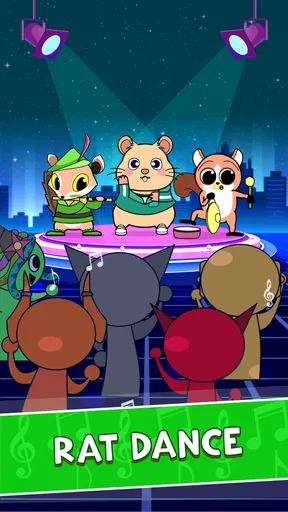
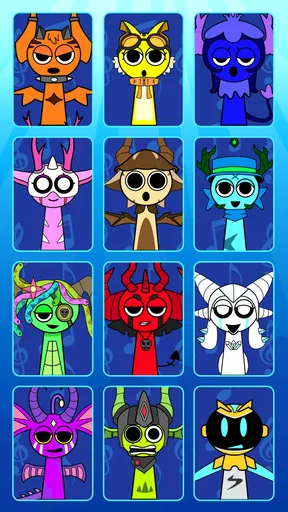
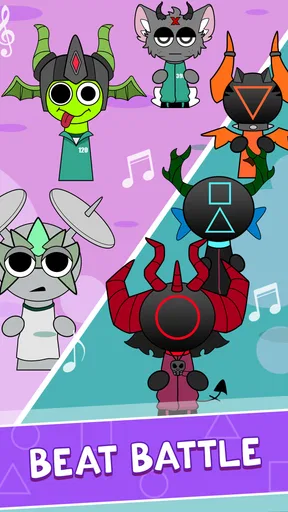
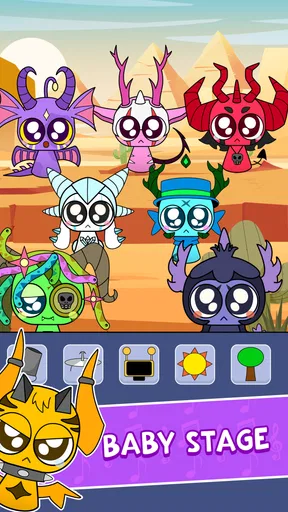
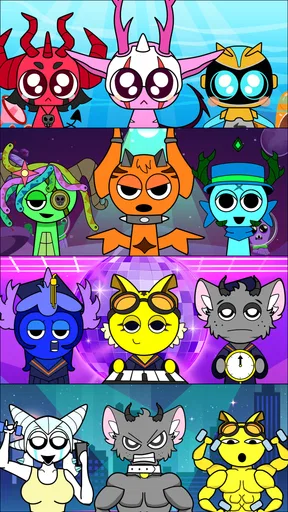
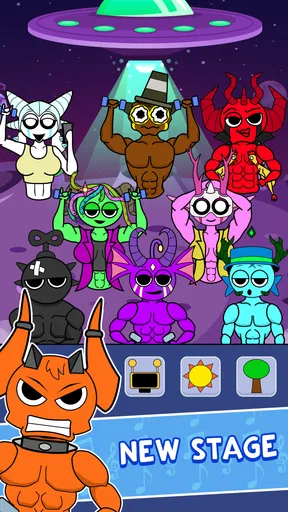
Our Review of Cute Monster Band
 Analysis by Appyee
I found Cute Monster Band easiest to understand when I stopped treating it like a traditional music game. It is a playful creation game from Great Meme Games in which I combine funny-looking characters and listen to the loops they produce together. The appeal is not about mastering an instrument or following a demanding song chart. It is about experimenting with combinations until the result sounds amusing, surprisingly catchy, or simply chaotic in a way that makes me want to try one more arrangement.
That makes it a natural fit for a shared phone or tablet. One person can choose a character, another can suggest the next one, and everyone can react to the changing melody without needing a long explanation. I can imagine using it during a short break, while waiting somewhere, or with a child who wants to make something immediately rather than read instructions first. At the same time, it is important to approach it as a compact creative toy, not as a complete music-making workstation or a deep rhythm challenge.
How the shared experience works in practice
The strongest part of the game is the simple social question it creates: what happens if I add this character instead of that one? The characters are the main building blocks, and the loop-based format means the result develops through small changes rather than a single long performance. That structure is useful on a shared device because turns can be short. Nobody has to hold the phone for a long session before another person gets a chance to contribute.
In my experience, the best way to play with someone else is to give each person a limited role. One player can choose the first character, another can decide which sound should join next, and a third can judge whether the mix feels pleasant or funny. This turns a very simple premise into a small coordination game. It also prevents the most confident person from making every choice while everyone else watches.
A realistic household moment would be a parent handing over a tablet for a few minutes while preparing a meal. The child can build a loop, ask the parent to choose the next monster, and then listen to the result together. Because the basic idea is immediately visible, the adult does not need to understand music theory or learn a complicated control scheme first. The interaction is more about shared discovery than competition.
There is also value in letting the same device travel between different users without expecting everyone to play in exactly the same way. One person may focus on making a balanced melody, while another may deliberately create an odd combination for the reaction. I would not call either approach wrong. The game is at its most enjoyable when the mix is treated as an experiment instead of a test with one correct answer.
Why loops suit short sessions
Loop-based play gives the game a useful stop-and-start rhythm. I can make a few choices, listen for a while, and put the device down without feeling that I have abandoned a long level. That is especially convenient in a household where attention is divided between several people. A child can have a turn, an adult can respond, and the session can end naturally rather than because someone has reached a difficult stage.
The trade-off is that the same structure may feel limited to players who want a clear campaign, escalating challenges, or a strong sense of completion. The pleasure comes from variation and repetition, so someone looking for a conventional music game with precise timing may prefer a rhythm title built around tapping notes. Someone who wants to compose detailed tracks may also outgrow this format quickly.
Making the first session smoother
I recommend starting with a small listening goal rather than trying to use every available option immediately. Pick one character, hear the loop, then add another and pay attention to what changes. This makes the cause-and-effect relationship easier to notice. On a shared device, it also gives younger players a clear turn and keeps the first experiment from becoming a confusing rush of taps.
Another useful habit is to pause between additions instead of changing several things at once. When the mix becomes more crowded, it can be difficult to remember which choice caused the improvement or the mess. Treating each addition as a separate test turns the game into a gentle lesson in layering, even though it never needs to present itself as an educational tool.
If the group is laughing at an unusual combination, keep it rather than immediately rebuilding a polished result. The unexpected mixes are often the moments that make the game memorable in a shared setting. A perfectly pleasant loop may be satisfying, but an intentionally strange one gives people something to discuss and compare.
Setup boundaries and everyday device sharing
Since this is a free game, the initial barrier is low. The listing identifies it as suitable for Everyone, and that broad age context matches the cheerful presentation and non-serious premise. Still, an age label should not replace ordinary supervision. A younger child may understand the game quickly but may also tap through screens, make purchases accidentally, or hand the device to someone else without realizing what is being changed.
The game includes in-app purchases priced at $2.99 per item. That is the detail I would discuss before placing it on a family device. The most practical boundary is not complicated: decide who is allowed to approve purchases, and make sure the device’s normal purchase protections are active before handing it over. I would also explain to a child that “free” refers to getting the game, not necessarily to every optional item that may appear inside it.
This matters more on a shared tablet than on a personal phone. A device used by several people can blur responsibility. One person may begin playing, another may continue later, and a child may assume that tapping a button only changes the band. Establishing a simple household rule—ask before buying anything—does more to prevent confusion than relying on everyone to interpret a payment screen correctly.
I would also choose a sensible moment for the first setup. Installing and opening the game when the device owner is present makes it easier to see how it behaves, check the current version, and explain the basic controls. The current version is 1.0.54, and the game runs on Android 7.1 or later. Those details make it accessible to many older Android devices, although compatibility alone does not guarantee that every older phone will feel equally comfortable for a group gathered around a small screen.
Keeping ownership clear
Shared use works best when the household treats the device owner as the person responsible for downloads and purchases. I would not assume that every player has a separate profile, personal progress space, or account boundary. Instead, I would think of this as a communal activity unless the game itself clearly presents a different arrangement during use.
That distinction is important for children who are used to games that track individual achievements. Here, the enjoyable result may belong to the moment rather than to one person. If several people take turns on the same installation, agreeing on a “leave it ready for the next player” habit can prevent arguments. It also keeps one player from repeatedly replacing another person’s arrangement before they have had time to hear it.
For a personal device, the boundary is simpler. I can experiment freely and accept that the experience is mine. On a family device, I would avoid assuming that a previous arrangement should be preserved unless the game visibly offers a way to do that. The safest expectation is that the group is sharing the play space, not maintaining separate musical projects.
Sound, timing, and shared spaces
The audio is central because the point of combining characters is hearing the resulting melody. That creates a small practical issue in homes, classrooms, waiting rooms, or public transport: a loop that is funny to one person may be distracting to everyone nearby. I would keep the volume modest and use headphones when appropriate, especially if the same device is being passed around in a quiet place.
Headphones introduce a coordination trade-off. They make private play more considerate, but they remove the easiest way for several people to judge the mix together. For group play, the device speaker at a reasonable volume is more useful. For solo experimentation, headphones can make it easier to notice subtle changes and decide whether a new character improves the overall blend.
I also would not use the game as background entertainment during a situation that requires concentration. Its loops invite repeated listening and small adjustments, which can pull attention away from homework, conversation, or a task that needs careful focus. It works better as the activity itself, even when that activity lasts only a few minutes.
Coordination without turning it into a competition
One of the more interesting ways to use the game is to create rules before starting. For example, each person can add only one character per turn, or the group can agree that nobody may remove a choice until everyone has heard the full loop. These are not built-in systems I would attribute to the game; they are household methods for making shared play fairer and more deliberate.
Those rules solve a common problem with simple creative games: the person holding the device has too much control. A turn-based approach gives quieter players a reason to participate and makes the final mix feel jointly produced. It also helps when an adult and child have different levels of confidence. The adult can model listening and decision-making without taking over the entire experiment.
For siblings, I would avoid framing the best result as a contest unless everyone genuinely enjoys that. Musical taste is subjective, and the game’s funny combinations are often more entertaining than a supposedly perfect arrangement. A better challenge is to make three different moods: one mix that sounds calm, one that feels busy, and one that is intentionally ridiculous. This encourages listening rather than arguing over a single winner.
Another useful approach is “prediction before placement.” Before adding a character, the player says whether they expect the loop to become fuller, stranger, or less pleasant. After hearing it, the group compares the result with the prediction. That small pause makes the activity more thoughtful and gives children vocabulary for describing sound without turning the session into a lesson.
When solo play is the better choice
Although the game suits shared use, solo play has its own advantage: I can take more time with each arrangement. Nobody is waiting for a turn, and I can test combinations that might seem too odd in a group. This is where the game feels most like a private sound toy. I can build a loop, listen repeatedly, and decide whether the appeal comes from harmony, contrast, or sheer silliness.
Solo play is also better when the shared device is needed for something else. A quick round can be easy to fit into a spare moment, but a household should not treat the game as automatically entitled to the tablet. In my view, its low-pressure design makes it easy to pause, so it is a good candidate for short breaks rather than an activity that needs uninterrupted ownership of the screen.
The limitation is depth. If I want detailed control over tempo, recording, editing, or arranging a complete song, I would choose a dedicated music application instead. If I want hand-eye challenge and score improvement, I would choose a conventional rhythm game. This title sits between those alternatives: more playful than a serious music tool and less demanding than a timing-focused game.
Age, trust, and what parents should consider
The Everyone rating makes the game approachable for a broad audience, and the monster-band concept is easy to explain to a child. The more important question is not whether a child can operate it, but whether the household is comfortable with the way the device is shared. I would introduce it alongside clear expectations about volume, turns, and purchases rather than assuming that a friendly visual style answers every practical concern.
For younger players, I would sit nearby during the first session. That is not because the basic musical idea is difficult, but because shared devices contain other responsibilities. A child may need help understanding which taps change the band, which actions simply move through the interface, and when to ask an adult before continuing. Once those boundaries are clear, the game can become a pleasant independent activity for short periods.
For older children and adults, the main question is likely to be whether the novelty lasts. The game is strongest for people who enjoy trying combinations and listening to the result. It is less suitable for someone who needs a narrative, competitive ranking, or a steady stream of increasingly difficult objectives. I would describe it as easy to enter but not necessarily designed to satisfy every kind of long-term player.
Trust also matters between users. If one person creates a mix and another immediately changes it, the first player may feel that their turn was erased. A simple spoken agreement—listen before changing, and ask before replacing someone else’s arrangement—makes a noticeable difference. This is especially useful when children share a device and the game becomes a spontaneous group activity.
The public reception suggests that many players enjoy the concept: it holds an average rating of 4.5 from around 8.4 thousand ratings and has passed one million installs. I see those figures as signs of broad interest rather than a guarantee that every household will love it. The people most likely to connect with it are those who appreciate cute characters, musical experimentation, and quick creative sessions.
Who should choose another kind of game
I would skip this one if my main goal were to learn an instrument, produce a finished track, or compete through precise timing. The loop-building approach is intentionally lighter. It gives immediate feedback, but it does not replace the control and structure found in a serious music tool. Likewise, a player who dislikes repetition may find the central listen-and-adjust cycle too narrow after the initial discovery.
I would also hesitate to install it on a device where purchases are difficult to supervise. The game itself is free, but the presence of $2.99 items means the household should be prepared to manage that boundary. If nobody wants to discuss purchases or shared access, a completely offline toy with no optional spending may be a better fit for that particular device.
On the other hand, I would recommend trying it for a family that wants a low-pressure activity with an obvious starting point. It does not demand musical knowledge, and the shared-device format can turn a few spare minutes into a small creative conversation. The best match is a household that values experimentation more than progress tracking.
My household verdict after using it
Cute Monster Band works because it gives every choice an audible consequence without making the player work through a complicated system. I can place characters, hear the loop evolve, and invite someone else to make the next decision. That simplicity is its main strength, especially when the game is used on a device passed between family members.
Its boundaries are just as clear. It is not a full music studio, not a demanding rhythm challenge, and not something I would install without thinking about purchase approval on a shared device. The experience depends on enjoying repetition and discovering combinations, so players who need a campaign or measurable mastery should look elsewhere.
As a free music game from Great Meme Games, it offers a friendly way to fill a short break or create a small group activity. The Everyone age rating and broad Android support make it approachable, while the optional items mean adults should set expectations before children play alone. I especially like it when the household treats the game as a shared sound experiment rather than another contest.
My final recommendation is straightforward: try it if you want quick, funny musical experimentation that works well with turns and conversation. Start with one character at a time, keep the volume considerate, agree on who can approve purchases, and let each player hear their contribution before the next change. With those simple boundaries, the game becomes more than a collection of cute sounds; it becomes a small, accessible activity that several people can enjoy together.
Privacy and Permissions
See what permissions an app requests and how it handles your data.
- Wi-Fi connection information
- view Wi-Fi connections
- Other
- view network connections, full network access, control vibration, prevent device from sleeping, Google Play license check
Verdict
Strengths of Cute Monster Band
- Charming monster designs appeal to younger players.
- Simple controls make it easy to start playing quickly.
- Bright visuals create a cheerful, inviting atmosphere.
- Short play sessions suit casual gaming on mobile.
- Lighthearted presentation makes it suitable for family play.
Limitations of Cute Monster Band
- Gameplay may feel repetitive after extended sessions.
- Limited challenge could disappoint experienced players.
- Some features may require patience or repeated progress.
- The cute style may not appeal to every player.
- Performance can vary on older mobile devices.
Similar Picks in This Category
View All
Tiles Hop Music & Ball Game
AMANOTES PTE. LTD.4.3

Magic Tiles 3™ - Piano Game
AMANOTES PTE. LTD.4.6

Real Piano
Bilkon3.7

Piano Game: Classic Music Song
Dream Tiles Piano Game Studio4.0

Smash Colors: Music Ball Rush
BADSNOWBALL HONGKONG LIMITED4.2

Piano Music Go-EDM Piano Games
Joy Journey Music Games4.5
Frequently Asked Questions
What is Cute Monster Band about?
Cute Monster Band is a casual music-themed game centered on charming monster characters and band-building activities. Players typically interact with colorful creatures, complete rhythm or performance-related challenges, and gradually improve their band. Its lighthearted presentation makes it approachable for younger players and casual users, while the collection and progression elements provide reasons to return and unlock additional content.
Is Cute Monster Band suitable for children?
The game’s bright visuals, friendly monster designs, and simple gameplay make it generally suitable for children and families. However, parents should still review the app’s age rating, privacy information, and available settings before installation. Depending on the device version, the game may include advertisements, optional purchases, or links to external pages, so parental controls are recommended for younger users.
Does Cute Monster Band require an internet connection?
Some features of Cute Monster Band may work without a constant internet connection, especially basic gameplay that has already been installed. Nevertheless, an internet connection can be required for downloading updates, displaying advertisements, synchronizing progress, accessing online content, or completing optional purchases. Availability may also differ between Android and iOS versions, so users should check the store listing before relying on offline play.
Does Cute Monster Band contain in-app purchases or advertisements?
Cute Monster Band may use advertising or optional in-app purchases as part of its free-to-download model. These can potentially provide extra items, remove waiting periods, unlock content, or support faster progression. The exact offers can change with updates and may vary by platform or region. Before downloading, users should check the current Google Play or App Store listing and enable purchase restrictions if children use the device.
What devices are compatible with Cute Monster Band?
Compatibility depends on the specific Android or iOS release, operating-system version, available storage, and device performance. Newer phones and tablets should generally provide the smoothest experience, while older hardware may experience slower loading or reduced performance. Before installing, check the official store page for the required Android or iOS version, storage needs, developer information, and recent user reports about compatibility.
Play our best games!


